The Stars, the Mall, and Your $700 Million: What Plano Is Actually Voting On
There’s been a lot of confusion about the Dallas Stars moving to Plano, so I want to lay out what is actually happening and what to expect, because this is the biggest thing to ever happen to Plano and understanding it all matters.
First, there will be a ballot measure for Plano residents at the bottom of this November 3rd midterm ballot (just a few places below my election for Collin County Commissioner, Precinct 4). Contrary to what many people think, that is NOT a vote on whether the Dallas Stars come to Plano.
I repeat: You will NOT be voting on whether an arena gets built at Willow Bend. You’ll be voting on whether to approve an additional financing mechanism under state law.
Read on…
I’ll lay out for you what’s actually happening and what you can do about it. I myself live near the Willow Bend site, so I’ll be driving past, hearing, and living with whatever gets built there, along with thousands of my neighbors.
What Council Actually Did
Back on June 8, the council took the following four related votes, each passing unanimously. They had to be separate votes legally, but they were all part and parcel to the same question: does Plano want to be the Dallas Stars’ new home?
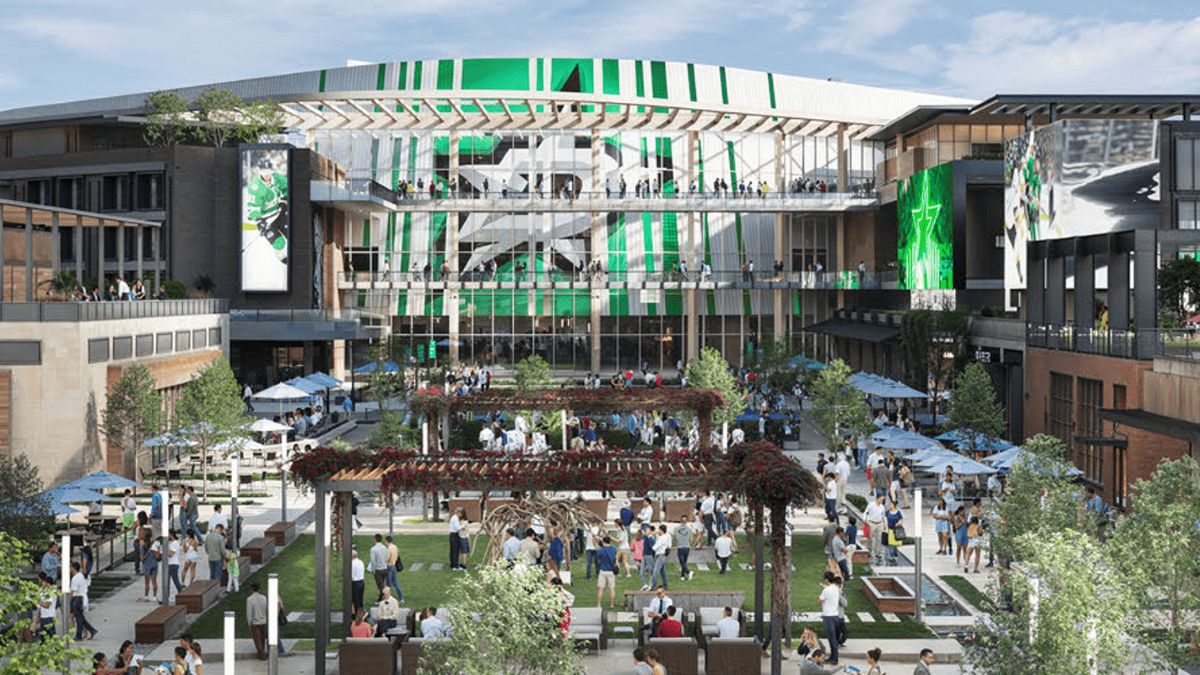
- A non-binding Letter of Intent to pursue a roughly $1 billion arena anchoring a $3 billion entertainment district on the 90ish* acres at Park Boulevard and the Dallas North Tollway.
- A $15 million economic incentive agreement with the mall’s ownership — up to $10 million for demolition and site preparation, and $5 million tied to building a new Visit Plano visitor center in the district.
- Creation of a Tax Increment Reinvestment Zone (TIRZ) covering nearly 900 acres along the tollway. It’s massive for a TIRZ. More on this below, because that’s the $700 million figure you’ve heard.
- A Venue Project Resolution for the State Comptroller, which is legally required before the city could ask voters to approve venue taxes at all, which is what we’ll be voting on in the November election.
* Different legal agreements cover different footprints with different acreages.
Council didn’t write a $700 million check back in June, at least not with money the city has now. I’ll explain how a TIRZ works shortly. Also, “non-binding” means just that, but that doesn’t mean the city has only an idle, passing interest in bringing the Dallas Stars to Plano. Read on, dear reader. Read on.
What Proposition A Actually Asks
On August 10, council unanimously called an election for Proposition A, which asks voters to authorize five venue-related taxes: a short-term motor vehicle rental tax up to 5 percent, a hotel occupancy tax (HOT) increase up to 2 percent, which would bring the combined rate to a 15 percent maximum, an event parking tax up to $3 per car, an admissions tax up to 10 percent of the ticket price, and a venue facility use tax of up to $5,000 per game on each member of a visiting major league team. Texas law provides for these taxes but requires voter approval. We may or may not get an additional $5,000 each time a visiting team has too many men on the ice. If Prop A is approved, it doesn’t automatically impose any of the taxes, it just authorizes council to decide which to enact, and at which rates.
Some of these taxes would be paid by locals who go to events (not just games) at the venue, vis-a-vis the parking tax and admissions tax, and some would be paid by visitors. It’s not borne by anyone in Plano who doesn’t set foot in the building. But that’s not to say there won’t be an impact to those who don’t set foot in the building. Again: read on.
Now I’ll re-address the biggest misunderstanding: a vote against Proposition A is not a vote against the arena. The city has tried to clarify this, and if Prop A fails at the ballot box, Plano can still move forward with the development. It would just deny this additional financing mechanism. The TIRZ is done, and requires no citizen election.
What a TIRZ is and How it Works
There’s a lot of misunderstanding about the TIRZ (Tax Increment Reinvestment Zone).
First, the concept of the increment. The arena is supposed to cost $1 billion or more—in fact, that’s a stipulation to get financing from the TIRZ. There will also be an entire entertainment district developed around the arena. All in all, the entire development will be worth around $3 billion. That’s a whole, whole lot more than it’s worth today. I don’t know the current property and sales tax revenue generated from the property, but it’s mostly a ghost town, so it’s not much compared to what it’s expected to generate in the future: more than $1.3 billion in new property taxes and around $245 million in sales taxes within the 41 year lifespan of the TIRZ.
That extra property and sales tax revenue that’s generated due to the property being worth a lot more after redevelopment than it is today is what goes into the increment in Tax Increment Reinvestment Zone. It’s money that doesn’t exist today and money that the city was never going to see unless redeveloped.
If the city is going to participate, a TIRZ is the proper mechanism for this. Likewise, many of you know I’m a big believer that people and businesses shouldn’t be punished for improving their property by having their property taxes spike, so having a TIRZ makes sense. Again, this is money that doesn’t exist today, and isn’t coming out of anyone’s pocket. It’s future money that could have gone to the city that is instead being used to finance the project that probably wouldn’t happen without the TIRZ anyway. It’s also highly unlikely that the formerly proposed redevelopment would have been worth nearly as much.
The TIRZ Boundary and Lifespan
A TIRZ has a specific geography. The city draws a line around an area, in this case, almost 900 acres, which is huge for a TIRZ, and takes a snapshot of today’s property and sales tax values inside it, as I explained above. The taxes on today’s value keep going into the city’s general fund, exactly as they do now. But as new development raises values inside the zone, the taxes on the growth (the “increment”) are used to pay off bonds issued for public improvements for the redevelopment. The city’s staff presentation projects that increment to be worth $1.63 billion over 41 years.
Again, the current city budget is unaffected. Tax revenue isn’t being pulled out to pay for any of this (it’s still being pulled out to pay for DART, though; IYKYK).
The increment is supposed to be paid toward the public improvements for the redevelopment until $700 million of increment has been raised, or 41 years passes by, whichever occurs first.
And yes, you may have noticed that the Stars’ lease obligation would be for 30 years—11 years short of the TIRZ lifespan. Also… if 41 years pass and the increment hasn’t generated $700 million, then the city—which means the taxpayers—are on the hook to make up the shortfall. That’s a problem for me. If the city is participating in this via bonds for public improvements specific to the redevelopment, I think the developer should assume the risk if the increment doesn’t produce.
The City Will Own the Arena
Under the proposal, Plano would own the arena and the land under it, leasing it to the Stars’ parent company for an initial 30-year term. The team would be responsible for operating and maintaining the building (dibs on riding the zamboni).
Why on earth would the city own it? Because in this case, city ownership is necessary to unlock the whole financing structure under Texas’s venue project law, which permits all the voter-approved taxes we discussed earlier. That’s only possible with publicly owned facilities. So the city keeps the arena and dirt under it, gets lease revenue, and, importantly, puts the cost of running the billion-dollar venue on the team, not on us as taxpayers. The building wouldn’t just be used for hockey. There will be concerts and Plano ISD graduations as well. I have many friends in Frisco, but it did chafe a little having my daughter’s graduation in Frisco. Just sayin’.
An additional note: city-owned property is exempt from property tax, so the increment comes from the rest of the property in the TIRZ, including retail, restaurants, housing, and office space.
The School District gets in on the Action
The Plano ISD school board approved participation in the city’s TIRZ for up to $250 million or 25 years. You might think the school district is sacrificing future money for an arena, but not so much.
If you’ve ever attended one of my Property Tax 101 seminars with Scott Grigg, you know how Recapture (“Robin Hood”) works for schools. Plano ISD is a “property-rich” district, which means it raises more in local property tax than the state’s formulas let it keep. The extra (not an increment in this case… just what the state doesn’t let us keep) goes to Austin to redistribute to poorer districts, including La Joya ISD, which built a $20 million waterpark. But I digress. This situation is provided for under state law. Under Section 311.013(n) of the Tax Code and Section 48.253 of the Education Code (there will be a quiz on this later), a school district that pays into an existing Tax Increment Fund is entitled to state aid equal to what it pays in, so the school district wil be made whole. The Texas Education Agency administers that offset.
Put simply, the choice in front of Plano ISD was never arena versus teachers. It was send that money to Austin to go to other districts, or invest it here at home.
Plano ISD’s participation is a little different. They’ll contribute 50 percent of the incremental value inside the city’s TIRZ (formally TIRZ Number 6), and is capped at $250 million, for no longer than 25 years, whichever occurs first. Compare to the city’s contribution at 100 percent for up to $700 million or 41 years.
Also, the Plano ISD trustees built in an escape pod to jettison R2 and the Death Star plans to Tattooine in case the Texas Legislature changes school finance law, as it does regularly, in that 25 years. If the finance laws change and the recapture offset goes away, Plano ISD can revisit the arrangement. Let’s hope the Death Star still has the thermal exhaust port in 25 years…
Now the County
On top of this, I’m told Collin County has been approached about participating in the same TIRZ.
While I think a TIRZ makes sense for the city and the school district, I don’t think it makes sense for the county. The reasoning just doesn’t apply at the county level.
The City of Plano is the one who will finance—and reap any tax and economic benefit from—the arena and development. City participation makes the most sense. Now, Plano ISD is roughly Plano-shaped and most of its taxpayers are the same as the city’s. That’s money staying where the taxpayers financing it are. And again, the alternative was watching that money with the school district head to Austin for redistribution around the state.
That doesn’t hold over the 886 square miles of Collin County, running from Plano to Celina, to Farmersville, Blue Ridge, and Anna. A family in Farmersville pays the same county tax rate you do and would get no value lift from proximity, no sales tax boost, no revitalized corridor… nothing but a smaller pool of county revenue for the roads, courts, jail, and public health the state requires us to deliver. The county delivers mandated services across the entire map. The further away the taxpayers sit from the zone they’re funding, the more upside down it gets.
There’s also an issue with setting a precedent: nearly every city in Collin County has an area in need of redevelopment with a corridor it would love to see revitalized. If the county buys into this one, what’s the limiting principle for the next one or the next twelve?
Whether an arena is built there or not, I want Willow Bend to succeed. My daughter and I will no longer perform on stage there after this year, but I care deeply about the healthy and economic vitality of our community and this region. By the same token, I don’t think it’s right to ask a family in Blue Ridge to help pay for it, even if it is money they weren’t going to otherwise see.
The Other Side
Now, dear taxpayer, here’s the reality, which you should weigh seriously.
The economic research on publicly funded sports venues ain’t good. In a 2005 survey of American Economic Association members, 85 percent said governments should eliminate pro sports subsidies; a 2017 University of Chicago panel found 80 percent agreement that stadium subsidies cost taxpayers more than they generate. A comprehensive academic review of decades of studies reaches the same conclusion. Economists frequently disagree, but they agree on this.
The cautionary tale everyone hould know is Glendale, Arizona, a suburb that bet big on an NHL team. Glendale borrowed $180 million in 2001 to build the Coyotes an arena, paid $25 million more in 2010-11 to cover the team’s losses, then agreed to pay $15 million a year to operate the building—shortly after laying off city employees to close a budget deficit. The team left for Utah anyway. Taxpayers were left holding the bag.
More similar to Plano’s model, the arena and mixed-use district, is the Atlanta Braves’ Battery development. The most rigorous study of it found a modest increase in local spending, about a third of which was county residents simply spending what they would have elsewhere, with total gains falling far short of projections. Economists call it the substitution effect. You and I would call it moving dinner from Legacy West to Willow Bend and counting it as growth.
There are some success stories too. A contested one in Sacramento’s Golden 1 Center, credited with billions downtown even while revenues ran below forecast and the city paid general fund dollars toward arena debt. One genuinely encouraging precedent is where the Stars are vacating: in 1998, to build the American Airlines Center, the City of Dallas issued $140 million in revenue bonds backed by voter-approved hotel and rental car taxes—the same kind you’ll be voting on in Prop A. Dallas retired that debt 16 years early.
The project can work, and it has worked right here in North Texas, with this very hockey team as the tenant (unless you want to attribute it to the Mavs).
It’s possible to do it right, but there are also many ways to do it wrong.
What separates the Dallas outcome from the Glendale outcome? As best I can tell, it’s down to three things:
- Who carries operating costs: Glendale paid to run its arena; Plano’s deal puts it on the Stars
- How rosy a picture the projections paint: the increment forecast is exactly that… a forecast
- What happens the day the music dies: do we say bye bye Miss American Pie with bonds still to pay off?
The letter of intent is non-binding, which means the city’s binding agreements haven’t been written yet. There’s still time to bring guardrails to the negotiation.
The Concerns People Want Answers To
Traffic. Park and the tollway are already brutal during rush hour. Now add 10,000+ vehicles leaving an event at once. The district plan includes infrastructure improvements, but residents have a right to expect that the traffic studies council has called for extend east of the DNT, which is where many event-goers will come from.
The neighbors. Unlike downtown arenas, this one would sit across the street from established neighborhoods. I’ve spent time with those neighbors, and their concerns are specific and legitimate: noise, stadium lighting, event-night cut-through traffic, crime, and what a district full of late nights does to streets that are currently quiet and peaceful by 9:00 PM. They’re solvable problems, but require buffering, parking design, screening, and ingress and egress routing, all with hard commitments in the master agreements rather than vague assurances.
On one point, though, I’d like to address something I think some people misunderstand. The current site plan puts the arena itself closest to the homes, and I’ve heard repeatedly that this is the worst possible arrangement. I’d argue it’s the best one on the table, because an arena functions as a screening wall the size of a city block. The traffic, noise, and lights would (or should) all be on the opposite side of the arena. The arena’s placement in this way protects the neighborhood from the intrusion. It had better be soundproofed though, because I wouldn’t want that horn blaring in my house when the Stars score a goal at 11:00 PM.
The citizen advisory committee. Council is forming a citizen committee of 10 to 12 people representing Willow Bend-area homeowners associations. I’ve always been a champion of such citizen committees during my years on council, including the Comprehensive Plan Review Committee and the Bond Referendum Citizen Advisory Committee (BRCAC for those of you who remember my pet name for it). Those committees need real citizens and to be given real information to work well, and when they’re empowered to report findings to council freely. This one needs to convene well before the master agreement is negotiated, and needs the traffic studies and all other information it requests.
Crime, panhandling, and homelessness. Entertainment districts concentrate money, crowds, and late hours, and no city is immune to what follows. This risk can’t be eliminated, but it has to be managed effectively through district design and appropriate public safety funding and resourcing. That requires a concrete plan.
Light rail. I don’t think it’s feasible to build light rail to reach the arena. It’s also not necessary. Although the DART rail serves the American Airlines Center, very few event-goers actually take it. Everyone else does just fine. If someone wants to build it, I’ll restate the position I’ve held all along: any rail must be a closed system with secure, controlled-access stations, and fare enforcement. We’re not having another open platform to ship one arean’s problems further down the line. That’s a hill I’ll die on.
What Happens Next and What You Can Do
Early voting starts October 19th, and Election Day is November 3rd. In the meantime, Plano and the Stars continue negotiating a master agreement and a Community Benefits Agreement. Just recognize, those documents, not your vote on the ballot, are what set the binding terms. Your vote just determines one method of financing. Those agreements matter more than your vote on Prop A, and you need to make any and all concerns heard by Plano City Council. Come respectfully and constructively with proposed solutions if you want to be heard. This ship is already pulling away from the dock, but still in the shallows.
I’ll also be on that same November 3 ballot as the Republican nominee for Collin County Commissioner, Precinct 4, just a few spaces above Prop A, which will be at or near the bottom of your ballot. People not only in Plano, but in Allen and Dallas can vote for me, but regardless of where you live, I’ll continue to give you the facts and promote self-governance.
Council meets publicly, and project information stays posted at plano.gov/WillowBendDistrict.
The difference between Plano becoming the next success story or the next Glendale won’t be decided solely by the Stars, the developers, or the eight council members. It’ll be decided by how We the People respond to and participate in it.
Success doesn’t happen by accident, but neither does failure.
—Shelby