
Energy
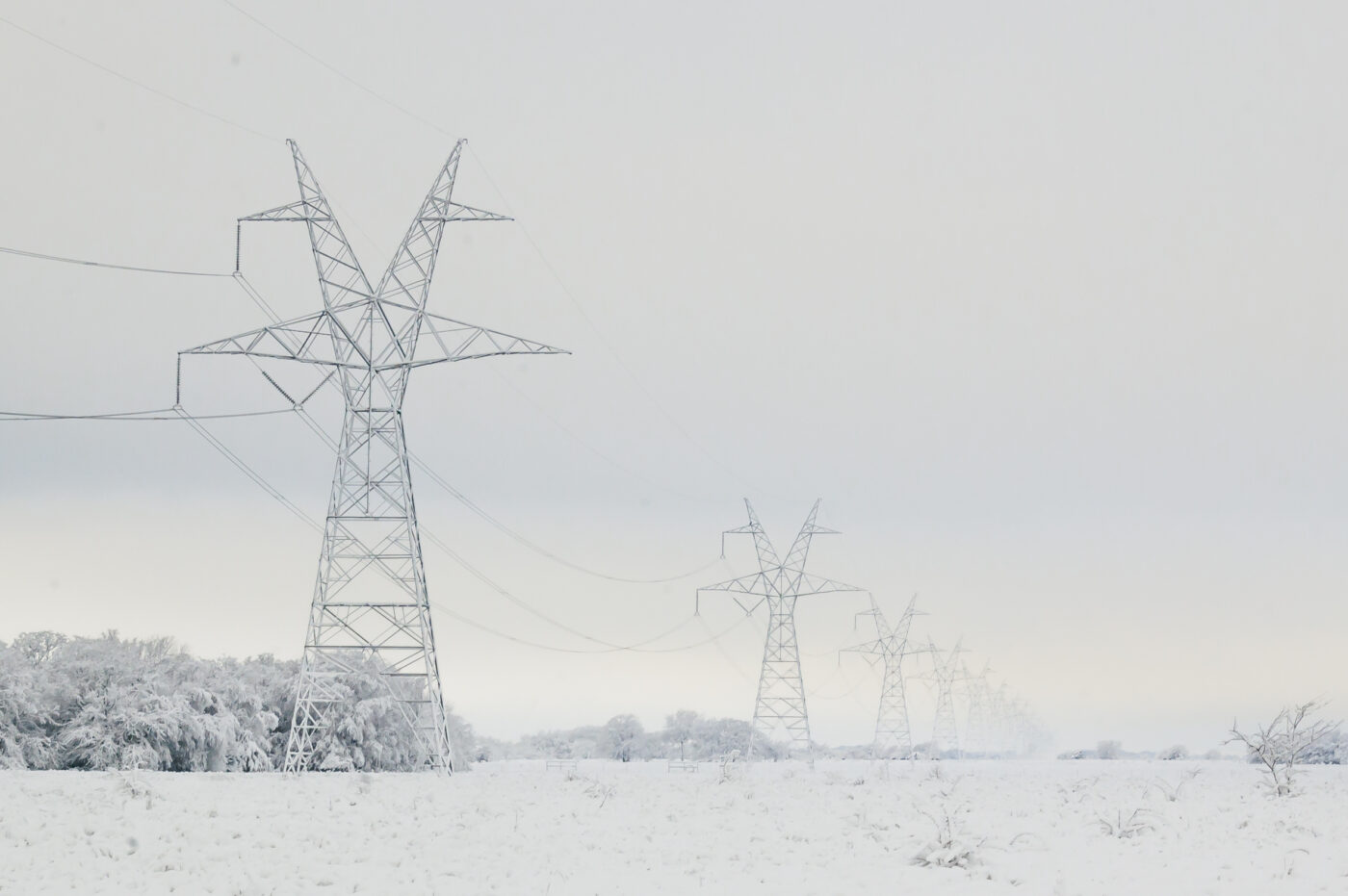
Energy is the other issue nobody is talking about, and North Texas is roughly a decade from a serious shortfall. ERCOT’s chief executive told the Texas Senate Business and Commerce Committee this summer that statewide demand will reach roughly 175,000 megawatts within six years, driven by data centers, population growth, and industrial expansion. As with water, we are not building production and distribution infrastructure fast enough to meet what’s coming.
Rising energy consumption is what a rising standard of living looks like: air conditioning, medical technology, refrigeration, the computing that runs a modern economy. We’ve got it so good, we’re at risk of having it bad. The answer to more consumption is more production, not rationing.
We also have to be honest about how fragile the system is. Our grid is vulnerable to overload, as happened in Winter Storm Uri in 2021. Moreover, a severe geomagnetic event—the kind NERC writes reliability standards for—could damage the energy infrastructure the grid depends on, and you can’t just pop over to Home Depot and pick up some new parts. Those are custom-built, long-lead-time components that can’t be replaced quickly. Our substations are largely insecure and vulnerable to sabotage, a risk that is no longer just theoretical in this country. And wind and solar, whatever their merits on an average day, are least reliable precisely during the major weather events when we need power most.
Here’s what I’ll push for:
I’ll work with local, state, and federal officials on more and stronger energy production and transfer infrastructure, and on hardening the grid we already have.
Nuclear produces the cleanest and most efficient baseload power available, and Texas has only two plants. I’ll champion additional nuclear capacity, especially Small Modular Reactors (SMRs). They’re smaller, safer, sited locally, and able to serve a county or a campus rather than requiring a long megaproject. I want to identify six sites around the county to deploy NuScale SMRs for more localized energy production, so we’re not as dependent on energy transfer from West Texas.
I’ll support renewables without relying on them. They earn a place in the mix; they cannot be the foundation of it.
I’ll advocate for micro-grids that let critical facilities keep operating when the larger grid is stressed.
And I’ll work to enable and empower residents and businesses to generate supplementary power at small scale. Every kilowatt produced at the point of use is a kilowatt that doesn’t have to survive the trip across a strained transmission system.
Approached deliberately, decades ahead, this is solvable.